

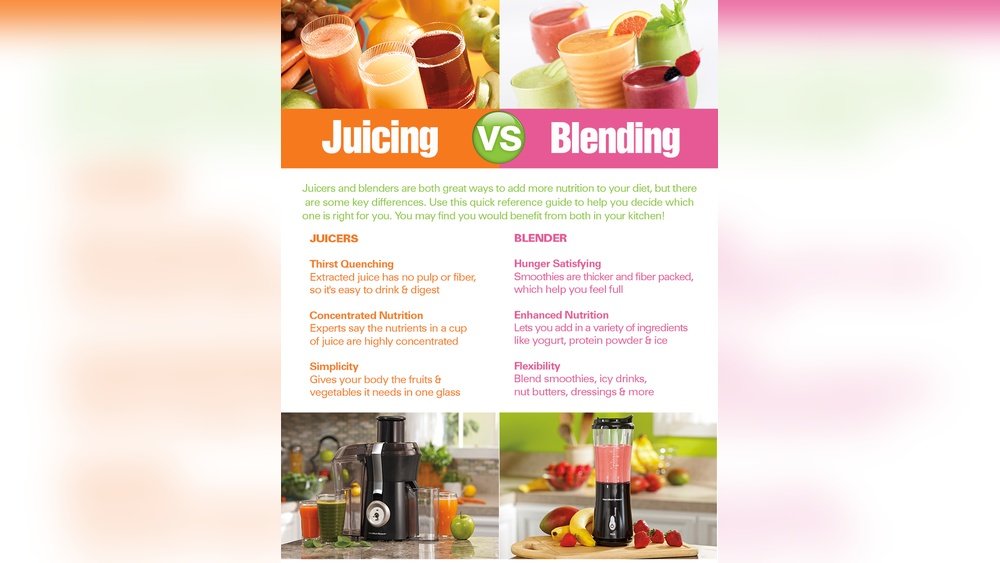
Are you confused about whether to buy a blender or a juicer? Both kitchen gadgets look similar but work in very different ways.
Choosing the right one can change the way you enjoy your fruits and vegetables every day. You’ll discover the key differences between a blender and a juicer, so you can pick the best tool for your health goals and lifestyle.
Keep reading to find out which one will make your drinks tastier, your meals easier, and your body happier.
Blender Basics
A blender is a common kitchen tool. It mixes, chops, and purees food quickly. Blenders help create smooth textures by breaking down whole ingredients. Understanding blender basics helps you use it well.
How Blenders Work
Blenders use sharp blades at the container’s base. The blades spin fast to cut and mix food. This process blends fruits, vegetables, and ice into a smooth mix. The motor powers the blades to crush and blend.
Common Uses
Blenders make smoothies, soups, sauces, and dips. They also crush ice for cold drinks. Blenders mix ingredients for batters and dressings. They keep fiber in the food, unlike juicers.
Types Of Blenders
Countertop blenders are the most popular type. They have large jars and strong motors. Personal blenders are small and good for single servings. Immersion blenders are handheld and blend directly in bowls.

Credit: www.youtube.com
Juicer Essentials
Juicers play a key role in making fresh fruit and vegetable drinks. They separate juice from the pulp, leaving behind a smooth liquid. Understanding how juicers work helps you choose the right one for your needs.
Juicers come in different types and styles. Each model offers unique features for juice extraction. Knowing typical uses helps you pick the best juicer for your kitchen.
How Juicers Extract Juice
Juicers use two main methods to get juice out. One method is called centrifugal. It spins fruit or vegetables fast, breaking them down and separating juice from pulp. The other method is masticating. It crushes and presses produce slowly for more juice and less foam.
Both methods remove solids and fiber. The result is a smooth liquid full of vitamins and minerals. Some juicers handle hard produce better, while others work well with leafy greens.
Popular Juicer Models
Common juicer types include centrifugal, masticating, and triturating models. Centrifugal juicers are usually faster and easier to clean. Masticating juicers operate slower but extract more juice and nutrients. Triturating juicers use two gears to crush produce and often give the highest juice yield.
Each model fits different budgets and kitchen spaces. Choose based on how much juice you want and what ingredients you prefer.
Typical Applications
Juicers are great for fresh fruit juices, vegetable blends, and green juices. They work best with firm fruits like apples and carrots, plus leafy greens like spinach. Juicers also help make nut milk and wheatgrass juice.
They are not ideal for making smoothies or blending whole fruits. Juicers focus on liquid extraction, not mixing. Use juicers when you want pure juice without pulp.
Texture And Nutrient Differences
Blenders and juicers both prepare fruits and vegetables. They differ mainly in texture and nutrients. Understanding these differences helps choose the right appliance for your needs.
Pulp And Fiber Content
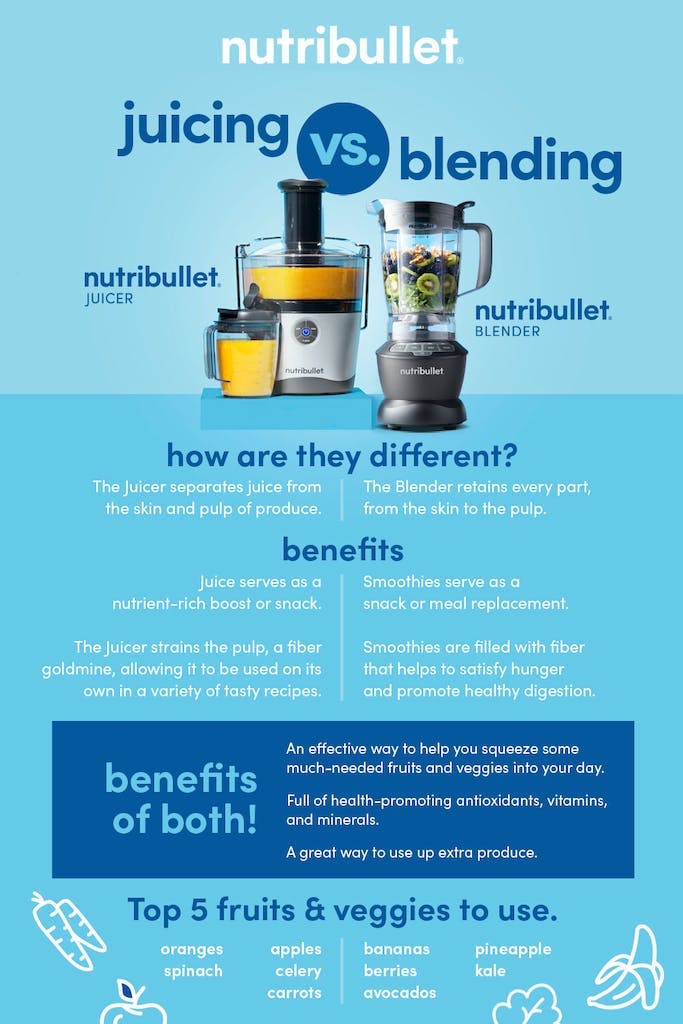
Blenders keep all parts of the fruit or vegetable. This includes pulp and fiber. The result is a thick, creamy texture. Juicers remove most pulp and fiber. This creates a smooth, thin liquid. The fiber in blenders aids digestion and helps you feel full longer.
Nutrient Retention
Blenders keep all the nutrients found in whole produce. Juicers may lose some nutrients during extraction. Heat and oxidation can reduce vitamins in juice. Blended drinks preserve more vitamins and minerals. Drinking whole fruits and vegetables gives more health benefits.
Effect On Digestion
Fiber in blended drinks slows sugar absorption. This helps maintain steady blood sugar levels. Juices digest quickly and can cause spikes in sugar. Fiber also supports gut health and regular bowel movements. Blended drinks offer a more balanced digestion process.
Credit: www.nutribullet.com
Health Benefits Comparison
Choosing between a blender and a juicer affects your health benefits. Both devices process fruits and vegetables but in different ways. This difference changes the nutrients you get and how your body uses them. Understanding these effects helps you pick the right tool for your diet and lifestyle.
Vitamins And Minerals
Blenders keep the whole fruit or vegetable, including the skin and pulp. This means more fiber, vitamins, and minerals stay in your drink. Juicers extract only the juice, leaving most fiber behind. Juices often have more concentrated vitamins but less fiber. Blended drinks offer a fuller nutrient profile for better health.
Impact On Satiety
Blended drinks make you feel full longer. The fiber in smoothies slows digestion and controls hunger. Juices, lacking fiber, digest quickly. This can lead to faster hunger after drinking. Choosing a blender may help reduce snacking and overeating.
Weight Management
Smoothies with fiber can support weight control by keeping appetite steady. Juices provide quick energy but may cause blood sugar spikes. These spikes can lead to cravings and weight gain over time. Blending fruits and vegetables is often better for steady weight management.
Cleaning And Maintenance
Cleaning and maintenance play a big role in choosing between a blender and a juicer. Both tools need care to work well and last long. Understanding how easy they are to clean and what parts need attention helps you keep them in top shape.
Ease Of Cleaning
Blenders usually have fewer parts to clean. Most jars and lids are dishwasher safe. Juicers often have many small parts. These parts can be tricky to clean by hand. Juice pulp can stick in the juicer’s filters. This requires thorough scrubbing to avoid mold and smell.
Parts To Maintain
Blenders mainly need cleaning of the jar, lid, and blade. The blade is sharp, so handle it with care. Juicers have more parts like strainers and pulp containers. These parts can wear out faster. Regular cleaning prevents clogging and damage.
Longevity
Proper cleaning extends the life of both appliances. Blenders last longer with quick cleaning after use. Juicers need more regular and detailed cleaning. Neglecting this can cause parts to break or rust. Taking time to clean ensures your device stays reliable.

Credit: ciarragadgets.com
Cost And Efficiency
Cost and efficiency are important factors to consider when choosing between a blender and a juicer. Both appliances serve different purposes, and their price and energy use reflect that. Understanding these differences helps you pick the best tool for your kitchen and budget.
Initial Investment
Blenders usually cost less than juicers. Basic blenders can be found at a low price. Juicers, especially slow or cold-press models, tend to be more expensive. The price difference comes from the technology inside each machine. Juicers have parts that extract juice, which adds to the cost.
Energy Consumption
Blenders often use less energy. They run for a short time to blend fruits or vegetables. Juicers may run longer to extract juice fully. Some juicers use more power because they crush and press ingredients. Energy use depends on the model and how long you run it.
Time Required
Blenders work quickly. You get a smoothie or puree in seconds. Juicers take more time. They need to separate juice from pulp. Cleaning a juicer also takes longer than a blender. The extra time may matter if you want a fast snack.
Choosing Between Blender And Juicer
Choosing between a blender and a juicer depends on your daily needs and kitchen habits. Both tools create healthy drinks but work differently. Knowing how each fits your lifestyle helps you pick the right one.
Lifestyle Considerations
Think about your routine and health goals. Blenders keep all the fiber, which fills you up longer. Juicers remove the pulp for a lighter drink. Juicers suit those who want quick nutrients without feeling full. Blenders work well for making smoothies and thicker drinks.
Recipe Compatibility
Blenders can handle fruits, vegetables, and even ice or nuts. They create smooth, creamy textures. Juicers are best for fresh fruit and vegetable juices only. They extract liquid and leave pulp behind. Choose a blender for versatile recipes. Pick a juicer for pure, clear juices.
Space And Storage
Blenders often take less space and are easier to clean. Juicers can be bulky and have more parts. Think about your kitchen size and storage options. A blender fits well in small kitchens. Juicers may need more counter or cabinet space.
Frequently Asked Questions
What Is The Main Difference Between A Blender And A Juicer?
A blender crushes whole fruits and vegetables, keeping all fiber. A juicer extracts only liquid juice, separating pulp. Blenders create thicker, fiber-rich drinks. Juicers produce smooth, pulp-free juices. This key difference affects texture and nutritional content.
Which Is Healthier: Blender Or Juicer?
Both have health benefits. Blenders retain fiber, aiding digestion and fullness. Juicers provide concentrated vitamins and minerals without fiber. Choose a blender for whole-food nutrition. Pick a juicer for quick nutrient absorption. Your health goal determines the best choice.
Can I Use A Blender Instead Of A Juicer?
Yes, but results differ. Blenders keep pulp and fiber, creating thicker drinks. Juicers remove pulp, making smooth juice. For fiber-rich smoothies, use a blender. For clear, pulp-free juice, use a juicer. Both tools serve different purposes.
Do Blenders And Juicers Clean Differently?
Yes, cleaning varies. Blenders usually have fewer parts and are easier to clean. Juicers have multiple components and can be more time-consuming. Rinse immediately after use for both. Regular cleaning keeps appliances hygienic and efficient.
Conclusion
Blenders and juicers serve different purposes in the kitchen. Blenders keep all the fiber and mix ingredients smoothly. Juicers extract only the liquid, leaving pulp behind. Choose a blender for smoothies and thicker drinks. Pick a juicer for clear, fresh fruit or vegetable juice.
Both tools help you enjoy healthy drinks. Think about what texture and nutrients you want. This way, you get the best use from your appliance. Simple and smart choices make healthy living easier.
smartblander.com is a participant in the Amazon Services LLC Associates Program, an affiliate advertising program. As an Amazon Associate, we earn from qualifying purchases made through our links.
